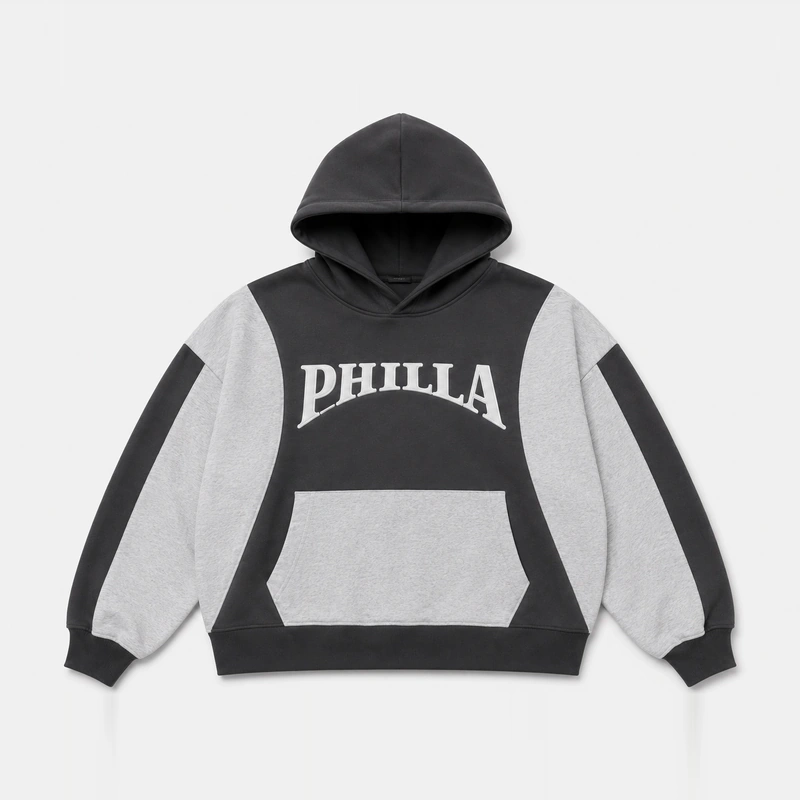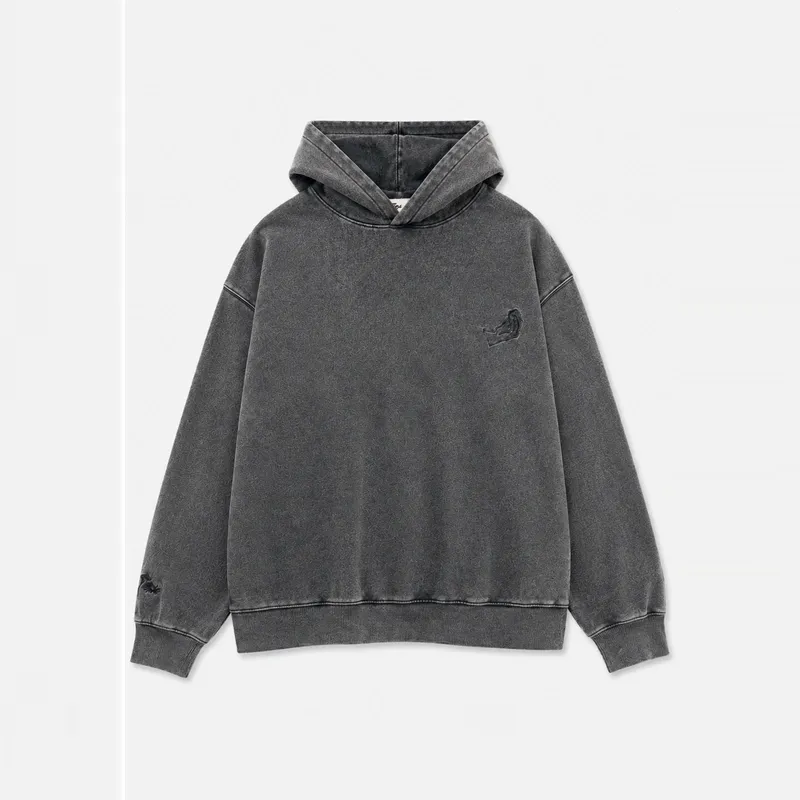



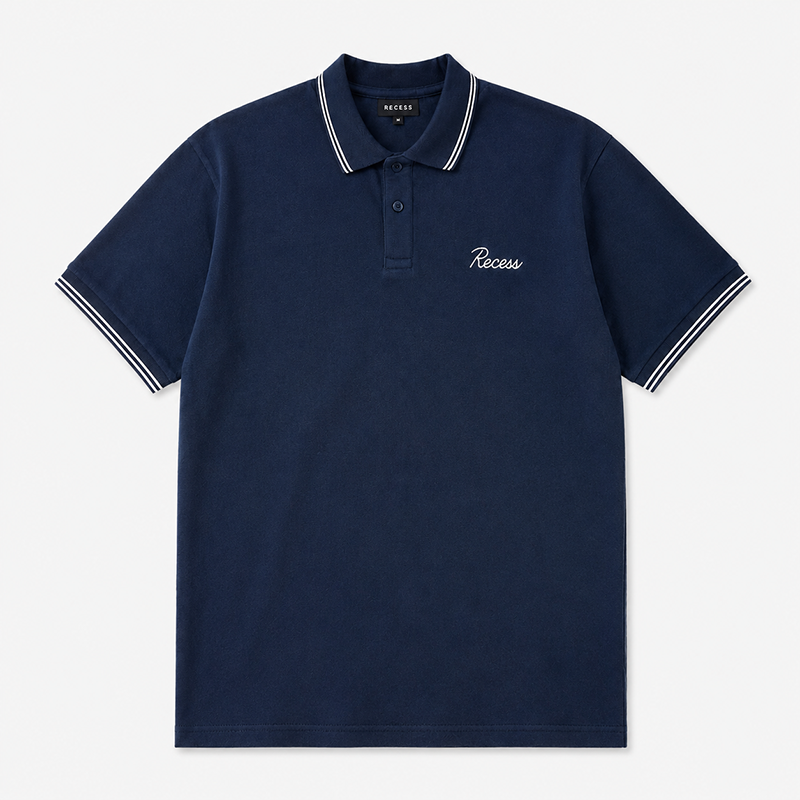


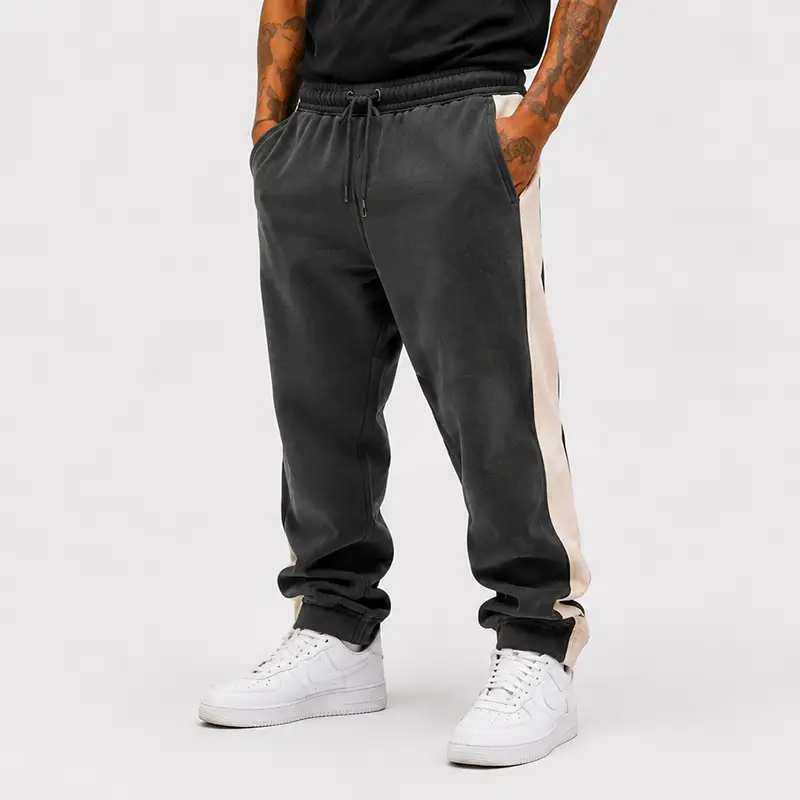

Choosing the right fabric weight is one of the most important decisions when developing a custom hoodie. The GSM affects how thick the hoodie feels, how well it holds its shape, how warm it is, and even the final production cost.
So, what is the best GSM for hoodies?
There is no single GSM that is best for every hoodie. A 300 GSM hoodie can be comfortable and suitable for everyday wear, while 400 GSM provides more structure and a premium hand feel. A 500 GSM hoodie is much heavier and is often selected for heavyweight streetwear.
At ASNA Apparel, we normally choose hoodie fabric according to the customer’s final design, desired hand feel, season, garment structure and target market. In this guide, we compare 300 GSM vs 400 GSM vs 500 GSM hoodies and explain how clothing brands can choose the right fabric weight for custom production.
What Does GSM Mean for Hoodies?
GSM stands for grams per square meter. It measures the weight of a fabric based on one square meter of material.
In simple terms, a higher GSM normally means a heavier and thicker fabric, while a lower GSM means a lighter fabric.
For example, if two hoodie fabrics have similar construction and composition, a 500 GSM fabric will generally feel much heavier and more substantial than a 300 GSM fabric.
However, GSM should not be used as the only measurement of fabric quality. Fiber composition, yarn quality, knitting structure, finishing, shrinkage control and workmanship can all affect the final quality of a hoodie.
300 GSM vs 400 GSM vs 500 GSM Hoodies
| Fabric Weight | Feel | Structure | Best For |
|---|---|---|---|
| 300 GSM | Medium Weight | Soft / Comfortable | Everyday Hoodies |
| 400 GSM | Heavyweight | Balanced / Structured | Premium Streetwear |
| 500 GSM | Very Heavy | Thick / Firm | Heavyweight Streetwear |
The difference between these fabric weights becomes very noticeable when the finished garment is worn. This is why we recommend that clothing brands choose GSM according to the intended style instead of simply selecting the heaviest fabric available.
Is 300 GSM Good for Hoodies?
Yes. 300 GSM is a practical fabric weight for many hoodies, especially when the brand wants a hoodie that is comfortable without feeling excessively heavy.
A 300 GSM hoodie generally has a softer and lighter hand feel compared with 400 GSM or 500 GSM heavyweight hoodies. It can work well for everyday casual wear, transitional seasons and markets where extremely thick garments are not necessary.
For brands that want a relaxed hoodie with good comfort and easier layering, approximately 300 GSM can be a practical starting point.
However, the final feeling still depends on the fabric composition and construction. Two fabrics with the same GSM can feel different if one uses a different yarn, knit structure or finishing process.
Is 400 GSM Good for Hoodies?
400 GSM is one of the most practical choices for premium custom hoodies and streetwear.
Compared with 300 GSM, the fabric normally feels more substantial and gives the garment more structure. This is particularly useful for oversized hoodies, drop-shoulder designs and streetwear silhouettes where the customer wants the garment to maintain a stronger shape.
For many custom hoodie projects, the 400–450 GSM range provides a good balance between thickness, structure, comfort and premium appearance.
This weight also works well with many customization techniques, including screen printing, puff printing, embroidery, appliqué and other decorative processes.
You can also explore our custom hoodie manufacturing collection to see different hoodie designs, printing techniques and customization options.
Is 500 GSM Too Heavy for a Hoodie?
Not necessarily. 500 GSM hoodies are suitable when the design intentionally requires a very heavyweight and substantial garment.
A 500 GSM fabric can create a thick, firm and premium hand feel. It is particularly suitable for heavyweight streetwear collections, oversized silhouettes and colder-season products.
However, heavier does not automatically mean better.
A 500 GSM hoodie uses more fabric weight per garment and can feel warmer and heavier when worn. It may also increase fabric consumption by weight, garment weight and international shipping costs.
For this reason, we normally recommend 500 GSM only when the customer’s design and target market genuinely require a heavyweight hoodie.
How Fabric GSM Changes the Fit of a Hoodie
Fabric weight affects more than thickness. It can also influence the overall silhouette of the finished garment.
A lighter hoodie fabric usually drapes more naturally around the body. As the GSM increases, the garment can become more structured and hold its shape more strongly.
This difference is particularly important for oversized streetwear. If the design includes dropped shoulders, wide sleeves, a large hood or a boxy body, choosing an appropriate GSM can help create the intended silhouette.
This is why we do not recommend selecting hoodie fabric based on GSM alone. The fabric must work together with the pattern, garment measurements and overall design.
How We Choose Fabric and GSM for a Custom Hoodie
When developing a custom hoodie, we normally start with the customer’s design or tech pack rather than selecting a random fabric weight.
We consider the required fabric composition, GSM, surface texture, color, hand feel, garment structure and decoration techniques. If the customer has a reference garment or a specific fabric feeling in mind, this information can also help us source a closer fabric.
Color selection is another important part of custom hoodie development. We can compare available fabric colors with the customer’s design and confirm the closest suitable option before production.
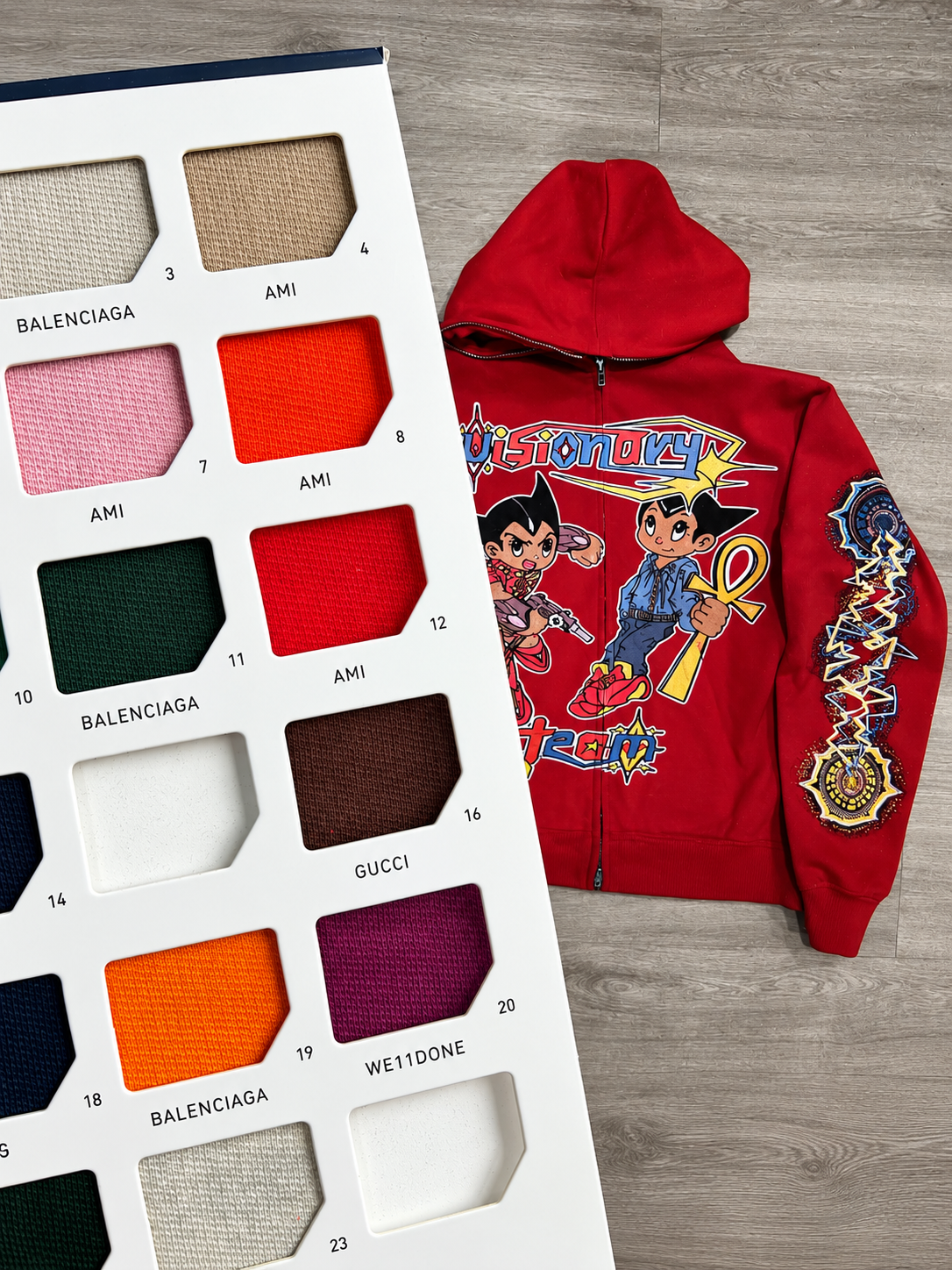
Fabric and color selection for custom hoodie development.
For custom colors, Pantone references can also be used when appropriate. The goal is to confirm the fabric before bulk production so that the final hoodie matches the intended design as closely as possible.
Fabric Composition Matters as Much as GSM
GSM tells us the weight of the fabric, but it does not tell us everything about how the hoodie will feel.
For example, cotton-rich hoodie fabrics can provide a natural and comfortable hand feel, while different blends can change softness, stability, durability and cost.
The inside structure is also important. Depending on the design, brands may choose loopback/French terry or a brushed interior. These fabrics can have similar GSM values while still feeling very different when worn.
Therefore, when comparing hoodie fabrics, brands should consider GSM + composition + knit structure + finishing together.
Best GSM for Oversized Streetwear Hoodies
For oversized streetwear hoodies, we often recommend a medium-heavy to heavyweight fabric because it helps support the larger silhouette.
A fabric around 400 GSM can provide enough structure for wide shoulders, oversized sleeves and a boxy body without making every hoodie extremely heavy.
For brands that specifically want a very substantial luxury-streetwear feeling, 450–500 GSM may be considered.
For a softer and more relaxed oversized hoodie, approximately 300–350 GSM may be more appropriate.
The best GSM for hoodies therefore depends on what the designer wants the finished garment to look and feel like.
Hoodie GSM and Printing or Embroidery
The decoration method should also be considered when selecting hoodie fabric.
Screen printing and puff printing can work well on many hoodie fabrics, but the surface of the fabric, print size, artwork and ink system can influence the final result.
Embroidery adds additional weight and structure to the decorated area, so large embroidery designs should also be considered when developing the garment.
For complex streetwear designs, the fabric, GSM and decoration should be evaluated together rather than separately.
Custom Puff Printing Hoodie Production Example
The following custom tracksuit is a practical example of how hoodie fabric, garment structure and decoration work together in a finished streetwear product.
This design uses raised puff printing to create a three-dimensional graphic effect. When developing this type of hoodie, we need to consider not only the artwork but also the fabric structure, hand feel and garment construction so that the final product achieves the intended appearance.
Custom puff printing tracksuit produced for a streetwear project.
Does Higher GSM Mean Better Quality?
No. This is one of the most common misunderstandings when selecting hoodie fabric.
A higher GSM means a heavier fabric, but it does not automatically mean higher quality.
A good hoodie also depends on yarn quality, fabric composition, knitting, dyeing, shrinkage control, sewing quality, printing or embroidery, and final quality inspection.
A well-produced 350–400 GSM hoodie can be more suitable for a particular brand than a 500 GSM hoodie if the lighter fabric better matches the intended fit, climate and price point.
The correct question is therefore not simply “What is the heaviest hoodie fabric?” but rather “Which fabric best matches this hoodie design?”
How GSM Affects Hoodie Production Cost
Fabric weight can affect the cost of custom hoodie production.
When fabrics have similar composition and width, heavier GSM generally means that the same kilogram of fabric produces less usable fabric length. As a result, fewer garments can be produced from the same fabric weight.
A 500 GSM hoodie can therefore require more fabric weight per garment than a 300 GSM hoodie.
The finished garment is also heavier, which may increase international shipping costs when producing bulk orders.
However, GSM is only one part of the final price. The actual cost also depends on fabric composition, order quantity, garment construction, printing, embroidery, labels, accessories, packaging and other customization requirements.
What GSM Should a Clothing Brand Choose?
As a general reference, clothing brands can think about hoodie GSM in the following way:
- Around 300 GSM: suitable for comfortable everyday hoodies and lighter layering.
- Around 400 GSM: a strong balance of structure, thickness and comfort for premium streetwear.
- Around 450 GSM: suitable for brands wanting a noticeably heavier and more structured hoodie.
- Around 500 GSM: suitable for intentionally heavyweight, thick and substantial streetwear hoodies.
These are practical references rather than strict rules. The final fabric should always be selected according to the specific design.
Sample Development Before Bulk Hoodie Production
For a new custom hoodie design, sample development is especially important.
A fabric specification may look suitable on paper, but the sample allows the brand to physically evaluate the thickness, hand feel, fit, hood structure, printing or embroidery and overall garment appearance.
If any adjustment is required, such as changing the GSM, measurements, print size, embroidery position or garment construction, it is much safer to make these changes before bulk production.
This is particularly important for heavyweight hoodies because fabric weight can significantly influence the final fit and structure.
Choosing the Best GSM for Your Custom Hoodie
There is no universal answer to the best GSM for hoodies.
If you want a comfortable everyday hoodie, around 300 GSM may be suitable. If you want a premium streetwear hoodie with more structure, approximately 400 GSM is often a practical choice. If your design requires a very thick and heavyweight garment, 450–500 GSM may be more appropriate.
The most important point is to choose fabric according to the final product you want to create—not simply according to the highest GSM number.
At ASNA Apparel, we develop custom hoodies based on customers’ designs and requirements. We can assist with fabric sourcing, GSM selection, sample development, custom sizing, screen printing, puff printing, DTG printing, embroidery, private labels, packaging and bulk production.
If you are developing a new hoodie collection, send us your design, tech pack or reference garment. We can evaluate the design and recommend suitable fabric options for sample development and production. You can contact ASNA Apparel to discuss your custom hoodie project.