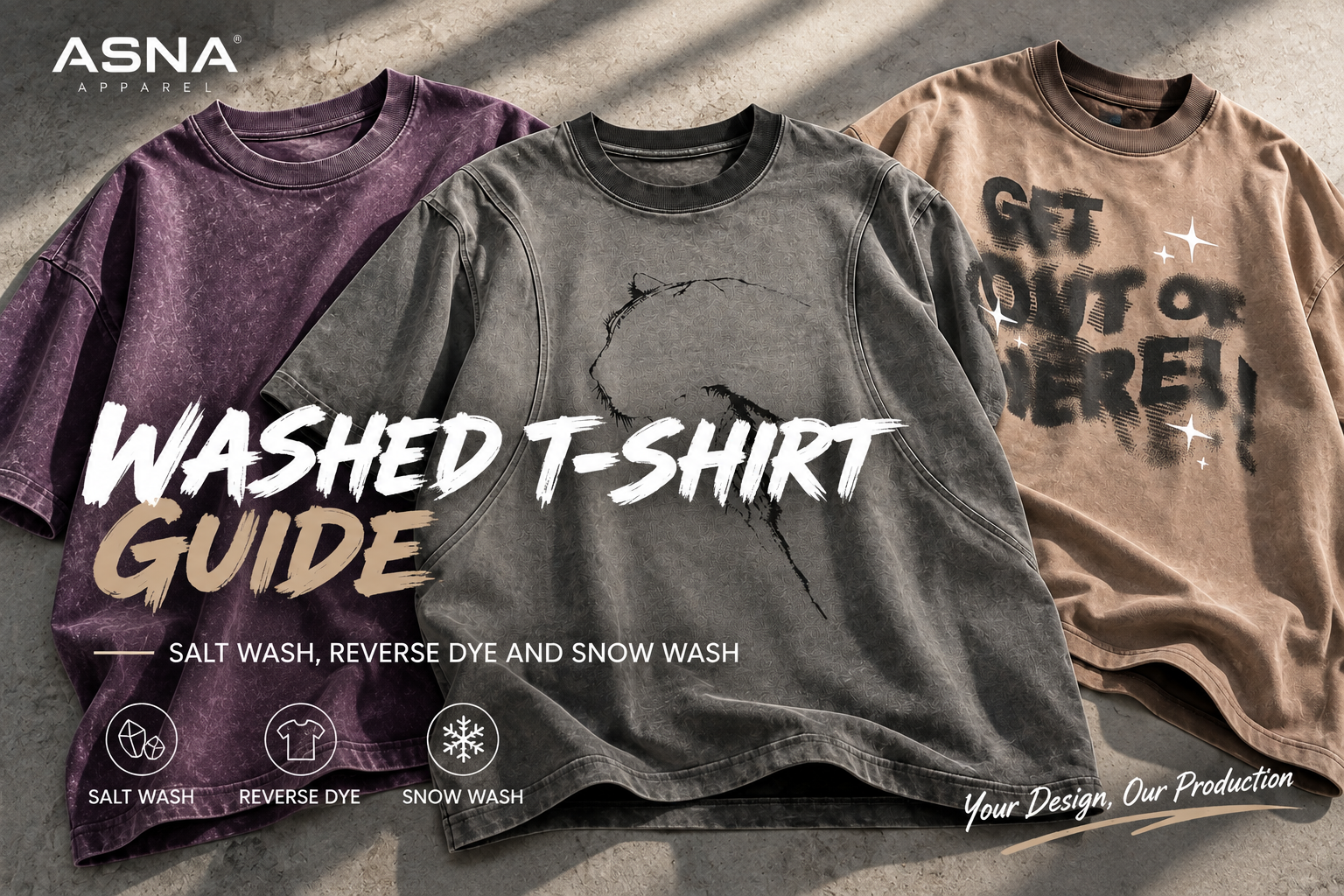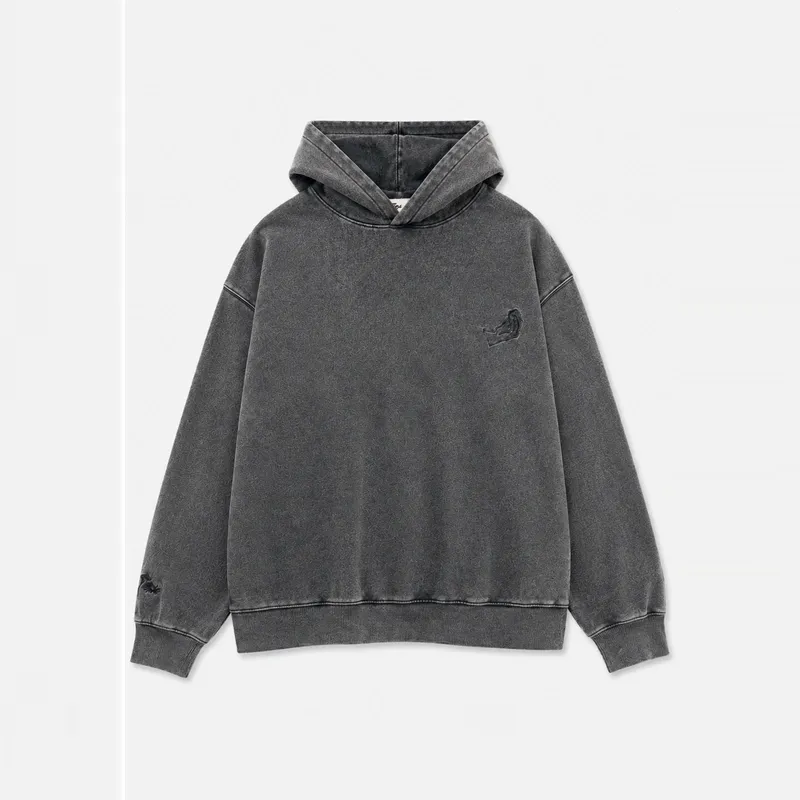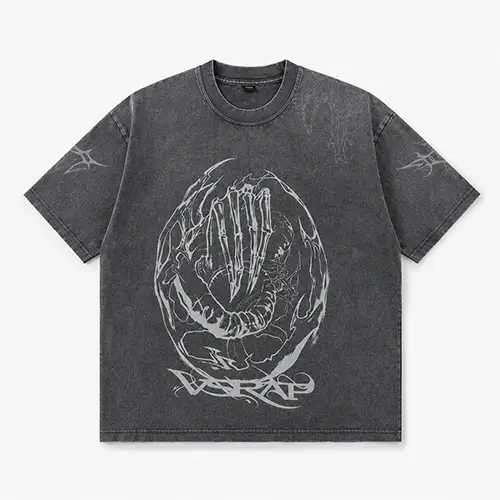
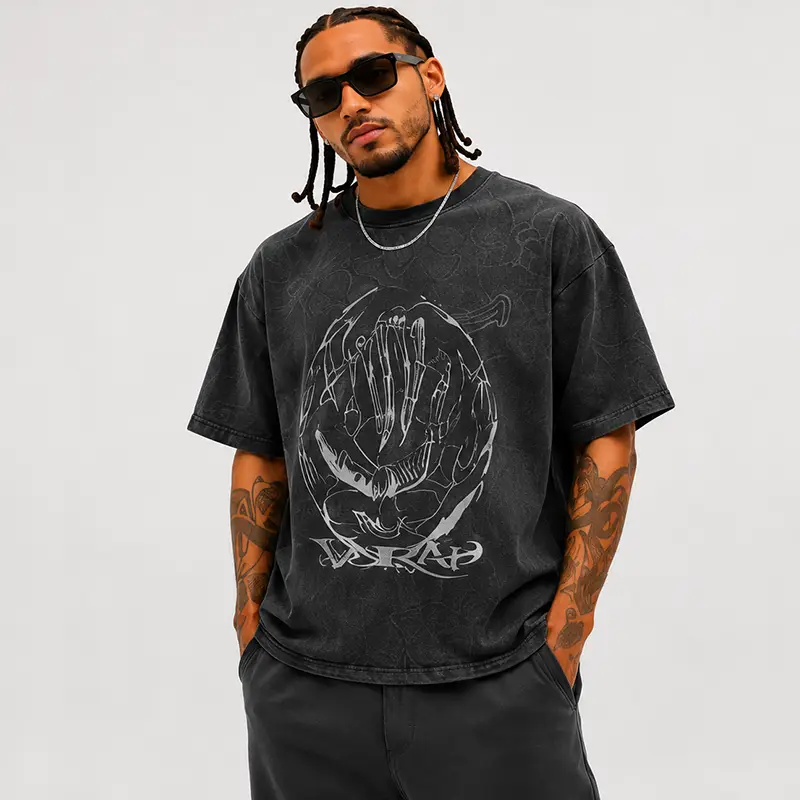
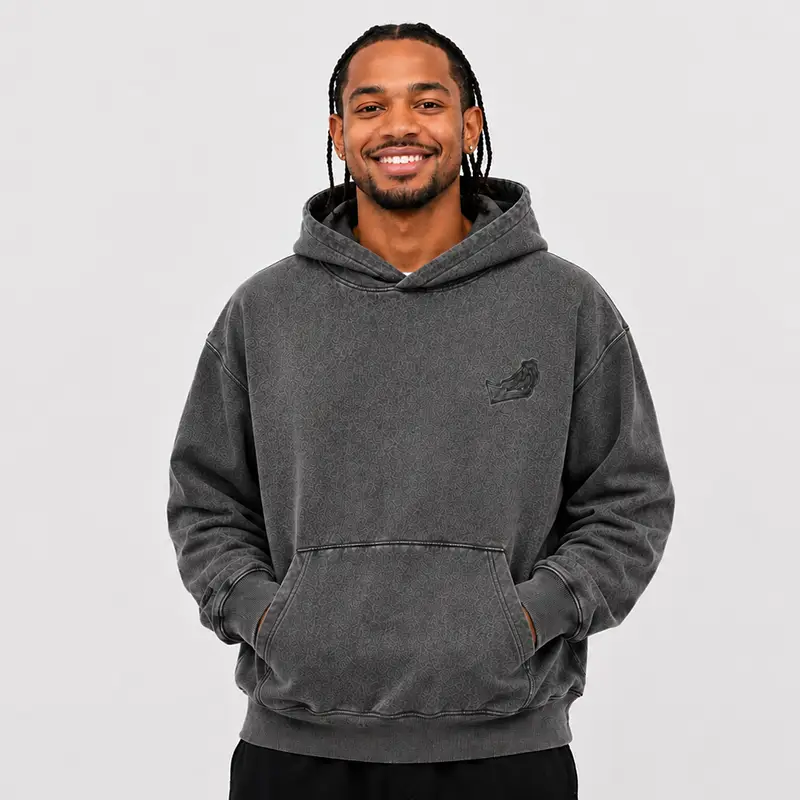
Acid wash clothing has become an important part of modern vintage streetwear. From acid wash hoodies and oversized T-shirts to faded sweatshirts and distressed garments, clothing brands are using washed finishes to create a worn-in appearance that cannot be achieved with a standard solid-color fabric.
However, many strong vintage wash effects are not created by one process alone. A base wash can first establish the overall faded color of the garment, while monkey wash can be applied to selected areas to create stronger localized fading and additional visual depth.
In this guide, ASNA Apparel explains how acid wash and monkey wash can work together, how localized fading is created, and how these techniques can be used on custom T-shirts, hoodies and sweatshirts.
What Is Acid Wash Clothing?
Acid wash is a garment finishing process used to create an irregular, faded and worn-in appearance. Instead of keeping the entire garment one completely uniform color, the washing process creates variations in tone across the fabric surface.
The final result can range from a relatively subtle vintage finish to a much stronger washed contrast. Fabric composition, original garment color, dyeing method and wash intensity can all influence the finished appearance.
Acid wash effects are commonly used for:
- Acid wash hoodies
- Acid wash sweatshirts
- Acid wash T-shirts
- Oversized vintage streetwear
- Washed denim and pants
For custom clothing production, the base wash establishes the overall vintage appearance of the garment. Other finishing techniques can then be added to create more localized effects.
Acid Wash Effects on Vintage T-Shirts
Vintage washing is not limited to hoodies and sweatshirts. It can also create a strong visual effect on oversized T-shirts and sleeveless streetwear.
The charcoal sleeveless T-shirt below shows how a washed surface can be combined with distressed edges, intentionally damaged areas and large graphics to create a much stronger vintage streetwear appearance.
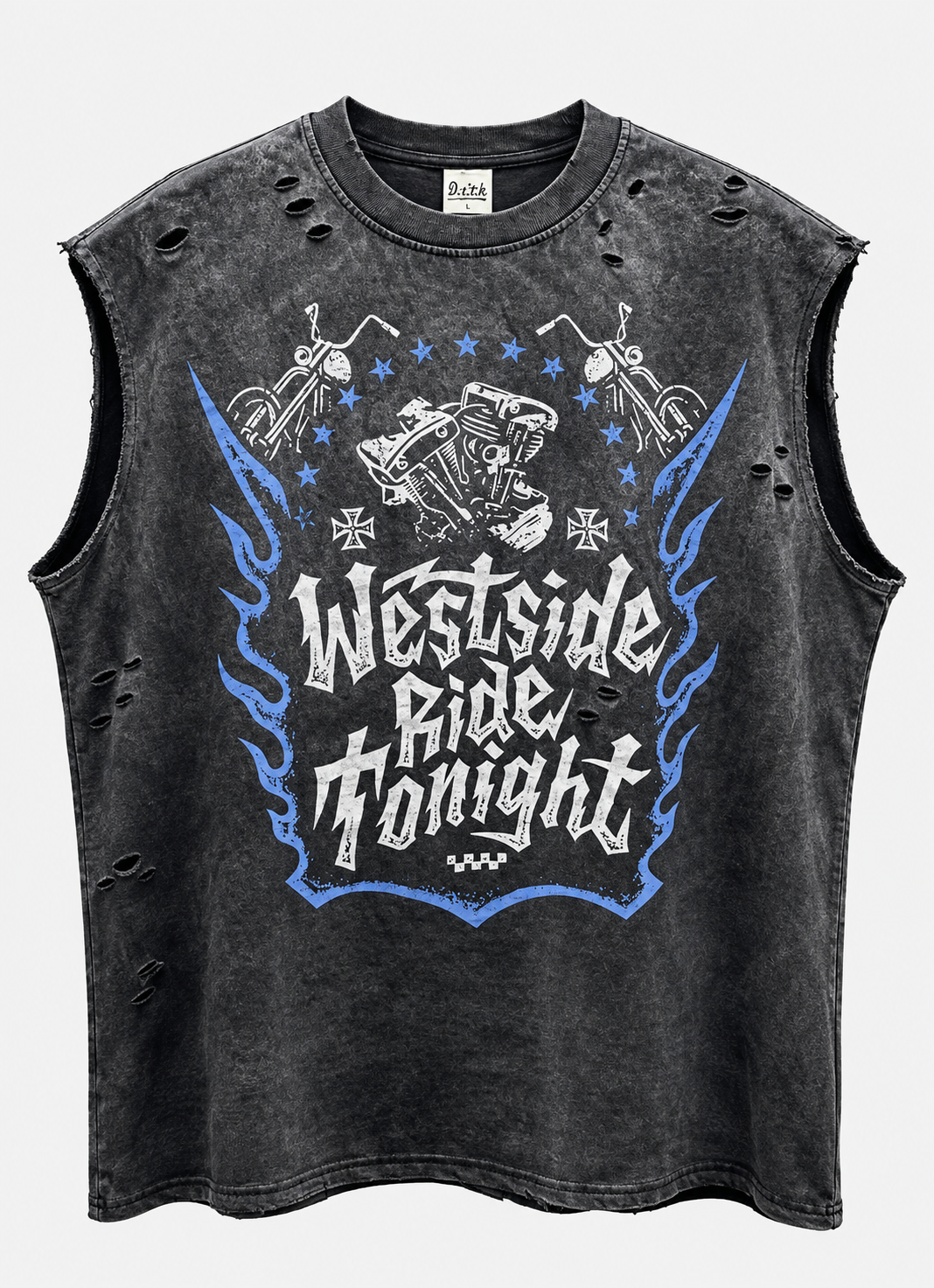
Instead of appearing like a standard solid-black printed T-shirt, the irregular charcoal surface gives the garment and artwork a naturally aged appearance. The final style comes from the combination of vintage washing, garment color, distressing and graphic placement.
What Is Monkey Wash in Clothing?
Monkey wash is used to create faded or highlighted effects in selected areas of a garment. Unlike a base wash that influences the overall appearance, monkey wash can concentrate stronger fading on specific positions.
Depending on the design, localized fading can be applied around the chest, stomach, shoulders, sleeves, pockets or other selected garment areas.
Three important elements can be controlled during development:
- Fading position – where the lighter areas appear
- Fading intensity – how subtle or strong the effect becomes
- Fading coverage – how much of the garment receives the treatment
When communicating with international clothing buyers, the visual effect can also be described as localized spray fading. This helps explain that the fading should appear in selected positions instead of covering the garment uniformly.
How Is Monkey Wash / Spray Fading Applied?
The following production video shows localized fading being applied directly to a T-shirt.
The operator controls where the treatment is applied and how much of the garment receives the faded effect. This makes it possible to develop different visual results according to the clothing design.
A subtle treatment can create soft faded highlights, while a stronger treatment can produce much more visible contrast. The fading can also be positioned differently across T-shirts, hoodies and sweatshirts.
How Do Acid Wash and Monkey Wash Work Together?
Acid wash and monkey wash can be used together on the same garment. They perform different roles in creating the finished vintage appearance.
The base wash develops the overall washed color and texture of the garment. Monkey wash can then introduce stronger localized fading in selected areas.
Base Wash → Vintage Base Color → Monkey Wash → Localized Fading
For example, a sweatshirt can first receive a light washed finish to establish its overall vintage base color. Stronger fading can then be added to selected areas of the front body and sleeves while other areas remain darker.
The result contains multiple levels of color and fading rather than one uniform washed surface.
Monkey wash does not always need to be combined specifically with acid wash. Depending on the required design, localized fading can also be added after other garment washing processes.
Vintage Wash Sweatshirt With Localized Monkey Wash
The sweatshirt below provides a clear example of how an overall washed base and localized fading can work together.
The purple-gray garment already has a vintage washed base, while stronger faded highlights appear across selected areas of the front body and sleeves. Darker areas remain visible between the highlights, giving the garment more depth.
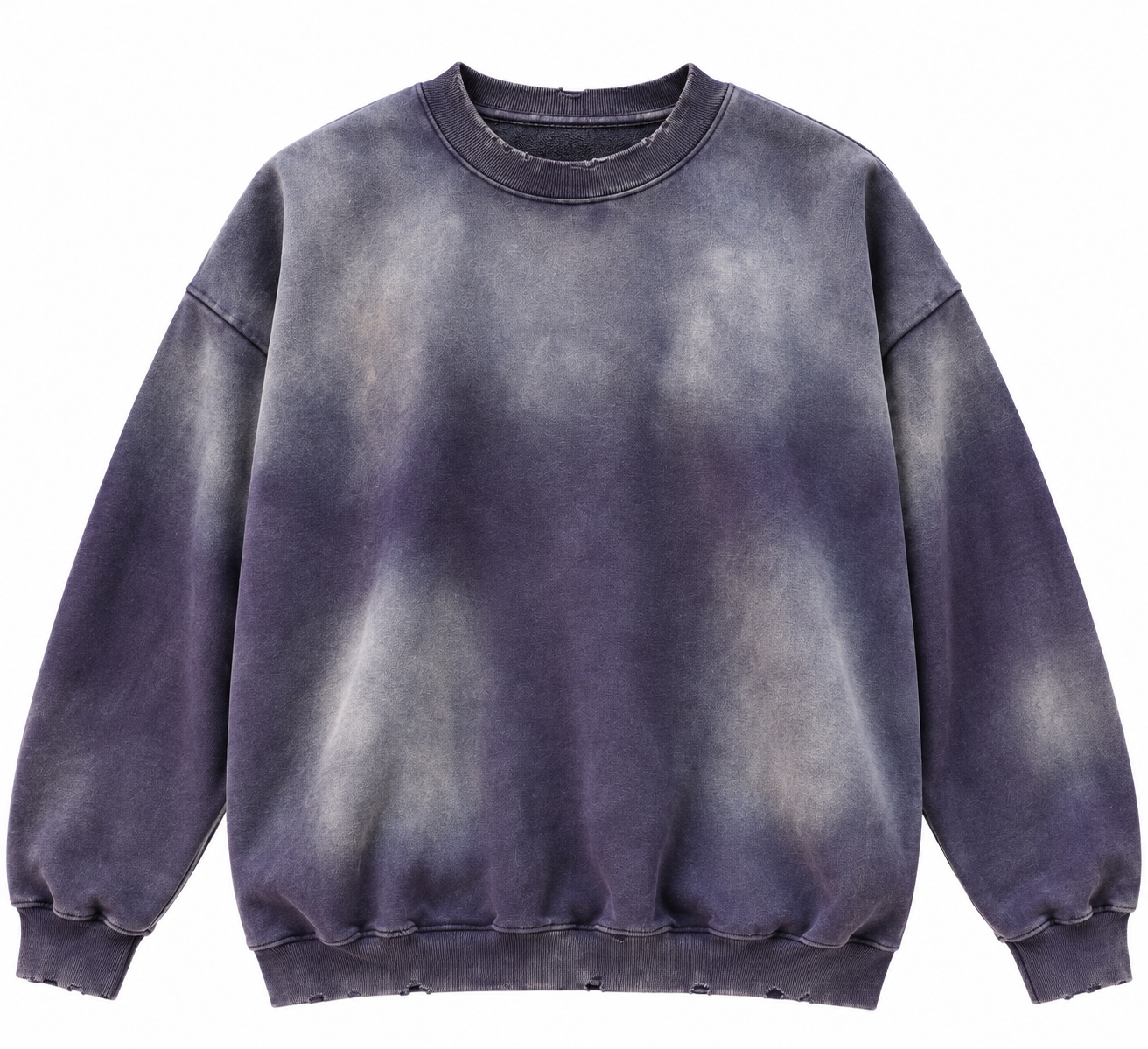
This type of effect can be adjusted according to the brand’s design. The base color, wash intensity, fading position and strength can all be confirmed during sample development.
For another real production example, view our Custom Monkey Wash Acid Wash Sweatshirt.
Acid Wash Hoodie and Zip Hoodie Design
Acid wash hoodies are another common application of vintage garment finishing. Because hoodies have a larger surface area than T-shirts, designers can develop fading across the chest, sleeves, pockets, shoulders and lower body.
Zip hoodies can also combine washed effects with large graphics and localized fading.
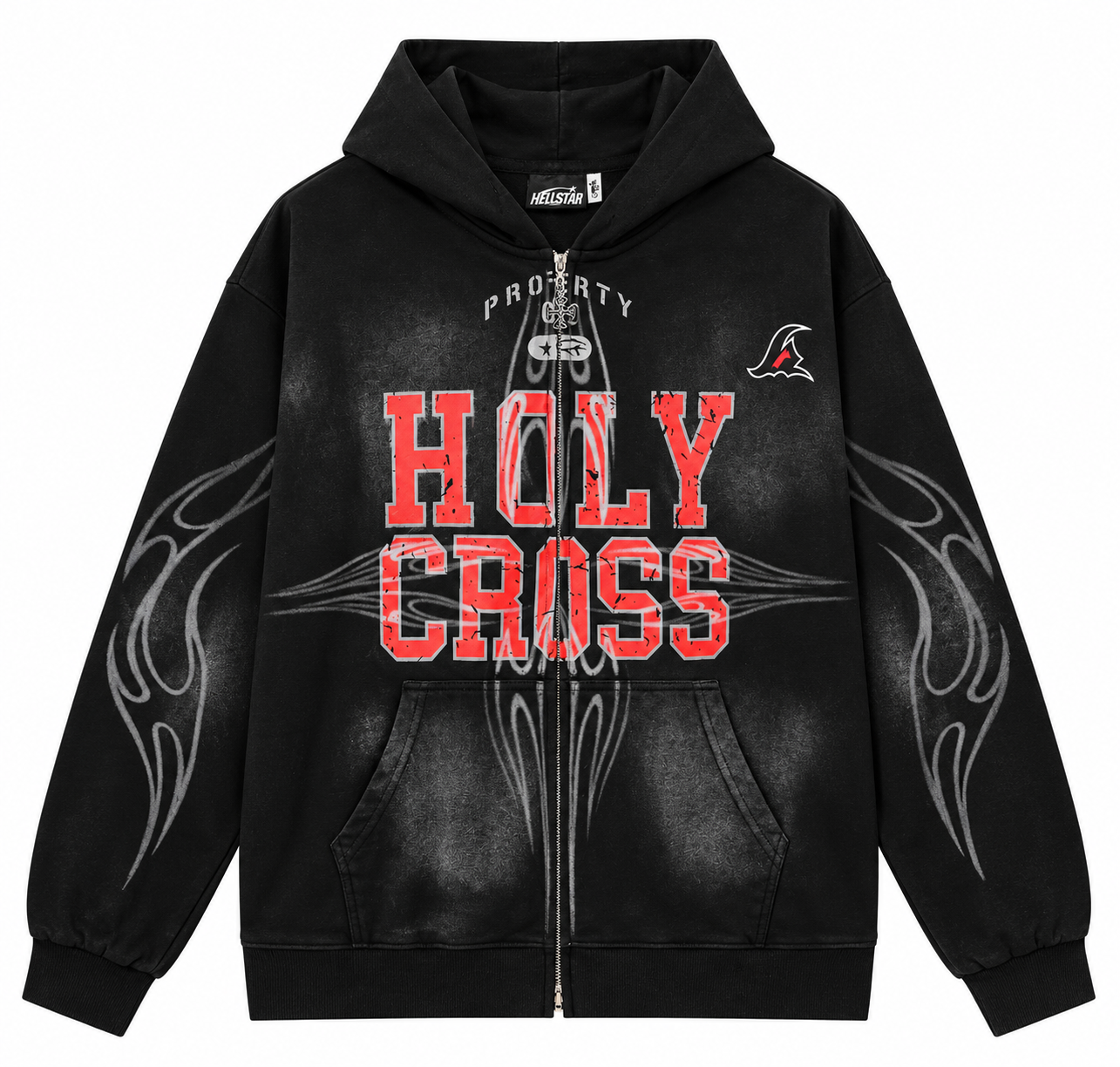
On a dark zip hoodie, lighter faded areas can create contrast around the artwork, pockets and garment construction without making every part of the garment equally light.
This type of combination works particularly well for streetwear brands developing oversized silhouettes, large graphics and layered vintage finishing effects.
Can Monkey Wash Be Combined With Other Streetwear Techniques?
Yes. Monkey wash can be combined with printing, embroidery, appliqué, distressing and other garment decoration techniques.
The following production video shows localized spray fading being applied to a customized dark streetwear garment.
When several techniques are used on the same garment, the fading position should be considered together with the artwork and garment construction.
For example, stronger fading can be positioned around graphics, pockets or selected garment panels to create additional visual depth without overwhelming important design elements.
What Is Vintage Wash Clothing?
Vintage wash is a broader description for clothing intentionally developed with an aged, faded or worn-in appearance. It does not necessarily refer to one single manufacturing process.
A vintage wash garment may combine several techniques, including:
- Acid wash
- Garment wash
- Monkey wash / localized spray fading
- Distressing
- Printing
- Embroidery
- Appliqué
This is why two garments described as “vintage wash” can look completely different. A light-colored hoodie may have soft, subtle fading, while a charcoal T-shirt or black zip hoodie may use stronger contrast, distressing and localized faded areas.
Why Do Vintage Wash Effects Look Different on Each Garment?
Even when similar washing and fading techniques are used, the final appearance can vary significantly from one garment to another.
Several factors influence the result:
- Original garment color: black, charcoal, gray, pink, purple and other colors create very different visual results after washing.
- Fabric composition: different fibers and fabric constructions can react differently during garment finishing.
- Fabric weight: lightweight T-shirt jersey and heavyweight sweatshirt fabrics do not produce exactly the same surface appearance.
- Wash intensity: a lighter treatment creates subtle aging, while a stronger wash creates more visible contrast.
- Monkey wash placement: changing the location of localized fading can completely change the visual balance of the garment.
- Distressing and decoration: printing, embroidery, appliqué and distressed details can further change the final streetwear appearance.
Which Fabrics Are Suitable for Vintage Wash Clothing?
Cotton fabrics are commonly used for washed streetwear because they can develop attractive variations in color and surface appearance during garment finishing.
For T-shirts, cotton jersey is frequently used. For hoodies and sweatshirts, cotton French terry and other sweatshirt fabrics can be selected according to the required GSM, structure and hand feel.
However, fabric composition alone does not determine the final wash result. Fabric construction, dyeing method, original color and washing intensity can all influence the finished appearance.
Because different fabrics may react differently, testing the required vintage wash effect during sample development is recommended.
How to Order Custom Acid Wash and Monkey Wash Clothing
When developing custom vintage streetwear, simply telling a manufacturer “I want an acid wash hoodie” or “make it vintage” may not provide enough information to reproduce the intended effect.
Clothing brands should provide as much of the following information as possible:
- Garment type: T-shirt, hoodie, zip hoodie, sweatshirt, pants or another style
- Fabric: composition, construction and required GSM
- Base color: the required garment color
- Base wash: the desired overall washed appearance
- Wash intensity: light, medium or strong
- Monkey wash placement: chest, body, shoulders, sleeves, pockets or other selected areas
- Fading intensity: subtle highlights or stronger visible fading
- Distressing: neckline, cuffs, hem or other selected areas
- Artwork: printing, embroidery, appliqué or other decoration
- Garment measurements: size chart or reference garment
- Reference images: clear front, back and detail views
The more accurately these details are communicated before sampling, the easier it is for the manufacturer to understand how the different finishing processes should work together.
Why Is Sampling Important for Vintage Wash Clothing?
Vintage washed garments contain more visual variables than standard solid-color clothing. Fabric behavior, dyeing, washing, localized fading and manual finishing can all influence the final appearance.
During sample development, brands should check:
- Overall wash color
- Wash intensity
- Monkey wash placement
- Localized fading strength
- Front and back appearance
- Distressing level
- Fabric hand feel
- Garment measurements and fit
- Printing, embroidery or other decoration placement
Once these details are approved, the confirmed sample provides a clearer production reference for the bulk order.
Custom Acid Wash and Monkey Wash Clothing Manufacturing
ASNA Apparel supports custom streetwear development using acid wash, garment wash, monkey wash / localized spray fading, distressing, printing, embroidery and other garment finishing techniques.
Brands can customize fabric, GSM, garment measurements, base wash, fading placement, distressing, artwork, private labels, hang tags and packaging according to their designs.
Explore our custom hoodie and sweatshirt manufacturing options or view our Custom Monkey Wash Acid Wash Sweatshirt for a real washed garment example.
If you are developing an acid wash, monkey wash or vintage wash streetwear collection, send your reference garment, tech pack or design through our Contact ASNA Apparel page. Our team can review the fabric, wash effect, fading placement and garment construction before sample development.
Frequently Asked Questions About Acid Wash and Monkey Wash
1. What is acid wash clothing?
Acid wash clothing uses a garment finishing process to create an irregular faded and vintage appearance across the fabric surface. The final effect can vary according to the fabric, garment color and wash intensity.
2. What is monkey wash in clothing?
Monkey wash is used to create localized faded or highlighted areas on a garment. The position, coverage and fading intensity can be adjusted according to the clothing design.
3. Can acid wash and monkey wash be used together?
Yes. A base acid wash can create the overall vintage appearance, while monkey wash can add stronger localized fading to selected areas of the same garment.
4. Can acid wash be used for hoodies and sweatshirts?
Yes. Acid wash can be used for hoodies, zip hoodies, sweatshirts, T-shirts and other streetwear garments. The process should be adjusted according to the fabric, color and desired vintage effect.
5. Should I make a sample before bulk production?
Yes. Sampling is recommended for custom washed garments because the wash color, fading position, monkey wash intensity, distressing, fabric appearance and garment fit should be checked before bulk production.