When choosing a printing method for custom T-shirts, two of the most common options are screen printing and DTG printing. Both can produce high-quality results, but they are suitable for different designs, order quantities and brand requirements.
At ASNA Apparel, we use both printing methods for custom clothing production. In our experience, the right choice depends mainly on your artwork, number of colors, print size, order quantity, desired hand feel and final visual effect.
In this guide, we compare screen printing vs DTG from a clothing manufacturer’s perspective to help you choose the right printing method for your next custom T-shirt order.
Screen Printing vs DTG: Quick Comparison
| Factor | Screen Printing | DTG Printing |
|---|---|---|
| Best For | Simple designs and bulk production | Detailed, multi-color artwork and smaller runs |
| Colors | Best for single-color or limited-color designs | Excellent for many colors and gradients |
| Color Vibrancy | Excellent | Very good, but often less vivid than screen printing |
| Hand Feel | More noticeable ink layer | Softer and lighter |
| Breathability | Lower for large, heavy print areas | Generally better |
| Bulk Orders | Excellent | Possible, but not always the most economical choice |
| Complex Artwork | More limited | Excellent |
What Is Screen Printing?
Screen printing is a traditional printing method in which ink is pushed through a prepared mesh screen onto the fabric. Each print color normally requires its own screen, so the number of colors in the artwork directly affects the printing process and production cost.
For custom clothing production, screen printing is especially suitable for logos, lettering, bold graphics and designs with a limited number of solid colors.
At ASNA Apparel, we generally recommend screen printing when the artwork contains approximately one to four colors, particularly for larger production quantities.
Why Is Screen Printing Good for Bulk T-Shirt Orders?
The main preparation work for screen printing happens before bulk printing begins. The artwork needs to be separated by color, screens need to be prepared, ink colors need to be matched and the printing position needs to be tested.
Once everything is set up correctly, the same design can be printed repeatedly with good consistency. This makes screen printing particularly suitable for bulk T-shirt production.
For very small quantities, however, these setup costs are divided across fewer garments, which can make the cost per piece relatively high.
Screen Printing Produces Strong, Vibrant Colors
One of the biggest advantages of screen printing is color vibrancy. Solid colors can look rich, strong and highly visible, including on dark-colored garments.
This is one reason many streetwear brands choose screen printing for bold logos, typography and graphic designs where strong color impact is important.

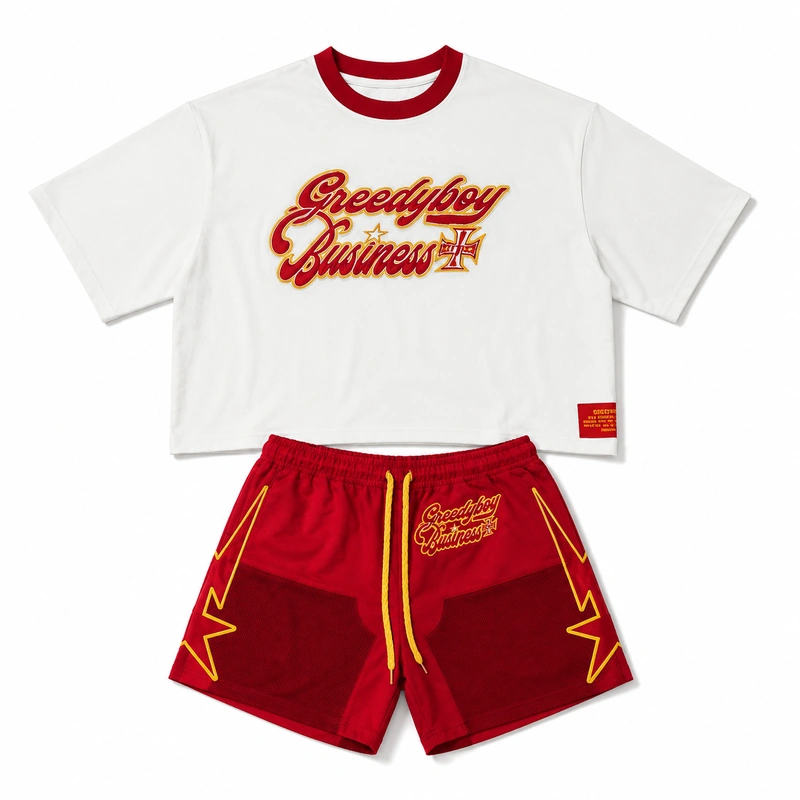
Real Multi-Color Screen Printing Production
Multi-color screen printing requires accurate color separation and registration. Each color is printed separately and must align correctly with the previous colors to create the final artwork.
For designs with only a few solid colors, screen printing can create a clean and vibrant result. However, as the number of colors increases, additional screens and printing steps may be required.
Learn more about our custom screen printing process.
What Is DTG Printing?
DTG stands for Direct-to-Garment printing. Instead of using separate screens for different colors, a DTG printer digitally prints the artwork directly onto the garment or fabric panel.
This gives DTG a major advantage when working with detailed artwork, multiple colors, gradients, photographic effects and designs that would require many separate screens using traditional screen printing.

Why Is DTG Better for Complex and Multi-Color Designs?
Imagine a design containing ten colors, subtle shadows and smooth color gradients. Producing the same artwork with traditional screen printing could require multiple screens, careful color separation and considerably more setup work.
DTG handles this type of artwork much more easily because the design is printed digitally.
For this reason, we often recommend DTG when a clothing brand has:
- Many colors in one design
- Color gradients
- Detailed illustrations
- Photographic artwork
- Complex graphics that are difficult to separate into individual screen-printing colors
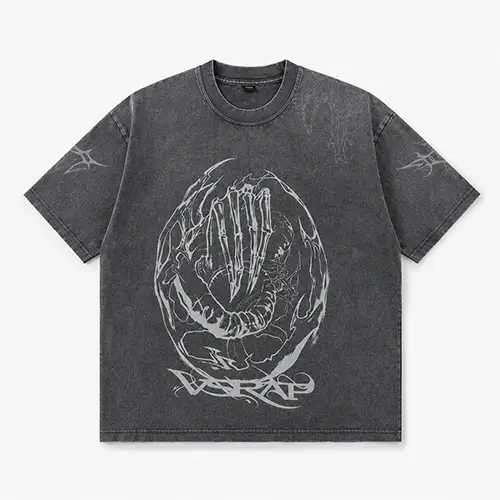
Real DTG Printing for Custom T-Shirts
Screen Printing vs DTG: Which Has Better Color?
If your priority is strong, highly saturated solid colors, screen printing usually has the advantage.
Screen-printed colors can appear very vivid and substantial, which works particularly well for bold streetwear graphics.
DTG can also produce excellent color and detail, but its biggest advantage is not necessarily maximum color intensity. Its strength is the ability to reproduce complex artwork with many colors, fine details and gradients.
In simple terms: screen printing is better for strong solid colors, while DTG is better for color complexity, gradients and fine details.
Screen Printing vs DTG: Which Feels Softer?
Screen printing normally leaves a more noticeable ink layer on the surface of the garment. The exact hand feel depends on the ink type, print size, number of layers and printing technique.
DTG generally has a softer and lighter hand feel. The print integrates more closely with the textile surface, so there is usually less of the noticeable printed layer associated with heavier screen printing.
This difference becomes particularly noticeable when the artwork covers a large area of the T-shirt.
Which Is More Breathable: Screen Printing or DTG?
DTG generally provides better breathability, especially for large printed areas.
A large screen-printed graphic can create a noticeable ink layer across the fabric, depending on the ink and printing technique used. DTG typically maintains more of the original fabric feel and flexibility.
For brands developing lightweight T-shirts or large graphics where softness and breathability are important, DTG can therefore be a good option.
Which Is More Durable: Screen Printing or DTG?
Both printing methods can provide good wash durability when the production process is handled correctly.
Professional screen printing requires correct ink selection, printing technique, curing temperature and curing time. When these factors are properly controlled, screen printing can withstand repeated washing without easily peeling away.
If a screen print experiences serious cracking, peeling or color loss after limited washing, the problem may be related to printing or curing quality rather than screen printing itself.
DTG behaves differently. Because the ink is applied directly to the textile surface and fibers, it does not behave like a thick surface print layer. After repeated washing, some colors may gradually become slightly less vivid, but a properly produced DTG print should not simply peel away as a separate layer.
Does DTG Printing Have a Minimum Order Quantity?
Technically, DTG printing itself is very flexible and can be used for very small printing quantities. However, there is an important difference between printing MOQ and custom clothing manufacturing MOQ.
A fully customized T-shirt still requires fabric sourcing, pattern making, cutting, sewing, finishing, quality inspection and packing.
Even if a DTG printer can print one piece, the garment itself still needs to be manufactured.
When the production quantity is extremely small, fabric purchasing, cutting and sewing costs are divided across fewer garments, so the manufacturing cost per piece can become significantly higher.
For this reason, although DTG itself can support small print runs, for fully customized T-shirt manufacturing at ASNA Apparel we generally recommend around 100 pieces per design when possible for a more practical production cost.
The exact MOQ can still vary depending on fabric, design, colors, labels and other customization requirements. Read our complete guide to MOQ for custom clothing.
What Is the MOQ for Screen Printing?
For screen printing, the practical printing quantity is usually higher because screens need to be prepared before production.
In our production experience, screen printing generally becomes more practical from approximately 80 pieces or above. However, when screen printing is part of a fully customized T-shirt manufacturing project, we normally recommend around 100 pieces per design when possible.
This allows the setup, cutting, sewing and printing costs to be distributed more efficiently across the production quantity.
How Does Print Size Affect Screen Printing and DTG Cost?
For both screen printing and DTG, the print area is an important factor when calculating production cost.
A small chest logo and a large full-back graphic do not require the same amount of printing work or ink.
For screen printing, the number of colors is another major consideration because different colors may require separate screens and printing steps.
For DTG, complex color combinations are easier to handle digitally, making it particularly useful for designs that would otherwise require many screen-printing colors.
When Should You Choose Screen Printing?
Based on our production experience, screen printing is usually the better choice when:
- Your design contains approximately one to four solid colors
- You want strong and vibrant colors
- You are producing a larger quantity
- Your artwork consists mainly of logos, lettering or bold graphics
- You want consistent printing across a bulk production run
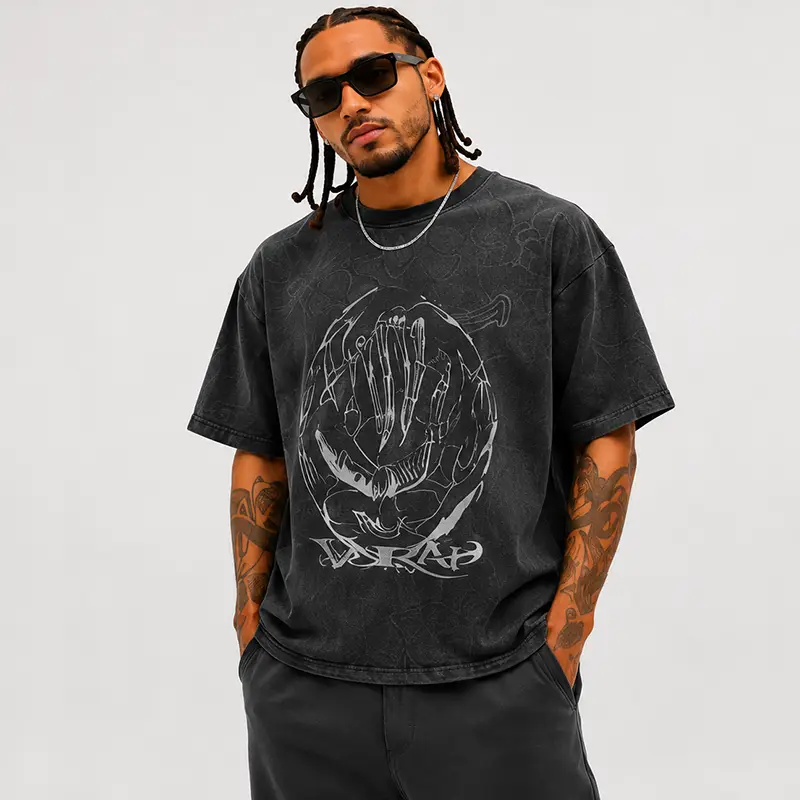
For many streetwear T-shirts with bold front or back graphics, screen printing remains one of the most practical production methods.
When Should You Choose DTG Printing?
DTG is usually the better choice when:
- Your artwork contains many colors
- The design includes gradients or photographic details
- You need very fine graphic details
- You prefer a softer print feel
- You are developing a smaller production run
- Creating many separate screen-printing screens would be inefficient
Screen Printing vs DTG: Which Is Better for Your Clothing Brand?
There is no single printing method that is better for every T-shirt.
If your design is relatively simple, contains only a few colors and will be produced in larger quantities, screen printing is usually the more practical choice.
If your artwork contains many colors, gradients or complex details, or you need greater flexibility for a smaller production run, DTG may be the better solution.
The final decision should be based on the actual artwork, fabric, print size, quantity and desired effect rather than choosing a printing technique before the design is reviewed.
Should You Make a Sample Before Bulk Printing?
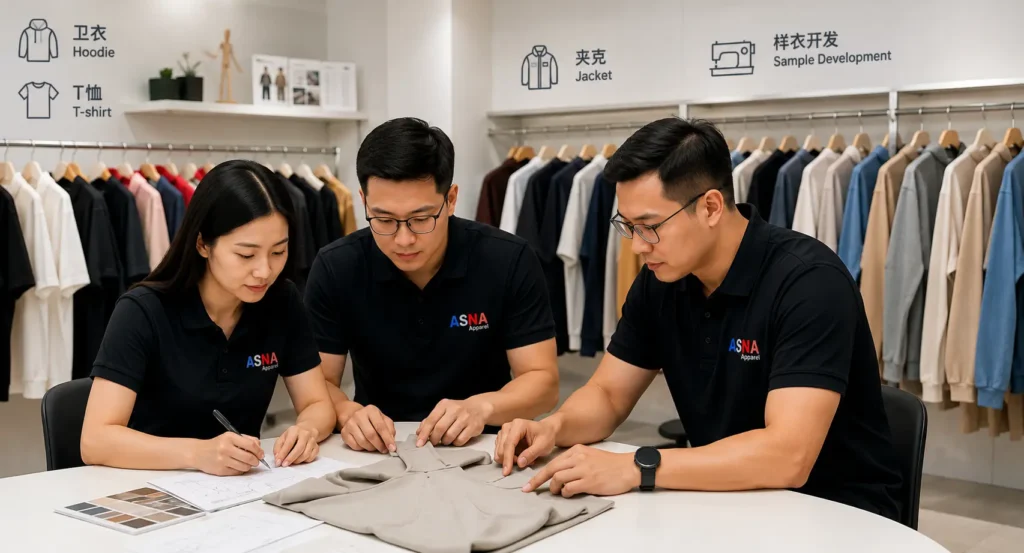
Yes. For a new custom T-shirt design, we recommend developing a sample before bulk production whenever possible.
A physical sample allows you to check the fabric, garment measurements, print size, print position, colors and overall appearance before committing to bulk production.
This is particularly important when developing a new clothing brand or producing a complex graphic for the first time.
Frequently Asked Questions About Screen Printing vs DTG
Is screen printing better than DTG?
Not necessarily. Screen printing is generally better for simple, limited-color designs and larger production quantities, while DTG is better suited to complex, multi-color artwork, gradients and smaller runs.
Which is cheaper, screen printing or DTG?
It depends on the design and quantity. Screen printing requires setup and screen preparation, but can become cost-effective for larger quantities. DTG requires less traditional screen setup and can be practical for smaller quantities or complex multi-color designs.
Can DTG print gradients?
Yes. This is one of DTG’s major advantages. DTG can reproduce gradients, detailed illustrations and complex color transitions that can be difficult or expensive to reproduce with traditional screen printing.
How many colors are best for screen printing?
Screen printing can technically produce multi-color artwork, but for many custom clothing projects we find it particularly practical for designs containing approximately one to four colors. As the number of colors increases, additional screens and production steps may be required.
Does DTG have an MOQ?
DTG printing itself can support very small quantities. However, fully customized garment production still includes fabric sourcing, cutting, sewing and finishing. Therefore, the practical manufacturing MOQ may be higher than the printing MOQ.
Get Advice on the Best Printing Method for Your T-Shirt Design
If you are unsure whether your artwork should use screen printing or DTG, you do not need to choose the printing method before contacting the manufacturer.
Send us your final design or tech pack, expected quantity, fabric requirements, print dimensions and preferred garment style. Our team can review the artwork and recommend a suitable production method based on the actual design.
ASNA Apparel provides custom T-shirt manufacturing including fabric sourcing, pattern development, sample making, screen printing, DTG printing, embroidery, custom labels, quality inspection and bulk production.
Explore our custom T-shirt manufacturing options or contact ASNA Apparel to discuss your next project.
Production recommendations, MOQ and pricing may vary depending on fabric, artwork, print size, number of colors, garment construction and order requirements. Final production details should be confirmed after reviewing the complete design.